
The Pleaser
Abandoning Yourself to Keep the Peace

Meet the Pleaser

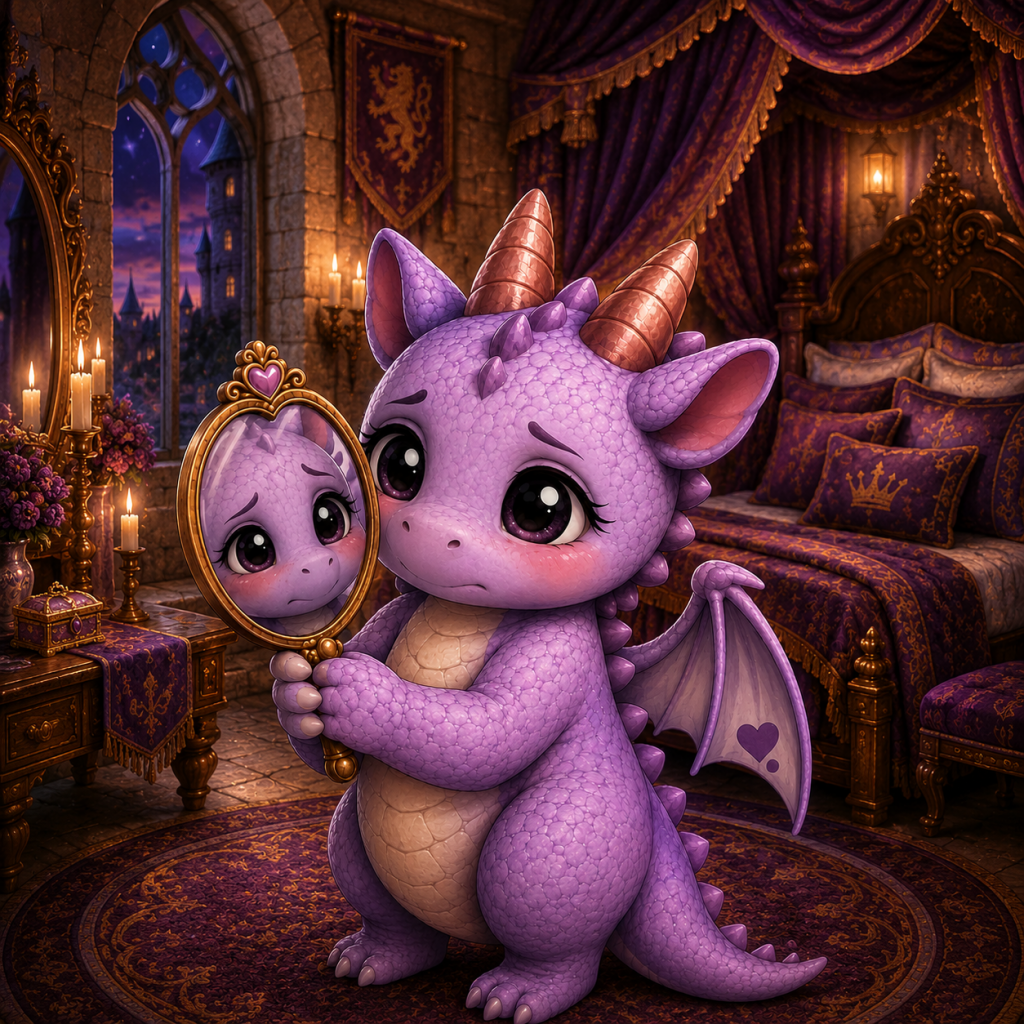
This dragon is always reading the room.
They notice shifts in people’s moods. They anticipate needs before they are spoken. They adapt, accommodate, and adjust themselves to keep the peace.
They smooth things over.
They avoid conflict.
They make themselves easy to love.
They look for ways to keep everyone comfortable because harmony often feels safer than honesty.
This dragon is always reading the room.
They notice shifts in people’s moods. They anticipate needs before they are spoken. They adapt, accommodate, and adjust themselves to keep the peace.
They smooth things over.
They avoid conflict.
They make themselves easy to love.
They look for ways to keep everyone comfortable because harmony often feels safer than honesty.
At first glance, the Pleaser can look kind, thoughtful, generous, and easygoing.
And often, they are.
But beneath the surface, they carry a question that follows them everywhere:
“What do they need from me?”
Because underneath that question is an even deeper one:
“What happens if I disappoint someone?”
Why This Dragon Exists
The Pleaser didn’t appear by accident.
They were created as a survival strategy.
Somewhere along the way, you may have learned that conflict felt unsafe, rejection felt painful, or disappointing other people carried consequences.
Maybe keeping the peace became your responsibility.
Maybe saying no created tension.
Maybe expressing your needs felt selfish.
Maybe approval felt connected to being agreeable.
Maybe adapting yourself felt safer than being fully seen.
So your nervous system adapted.
The Pleaser stepped forward and said:
“I’ll keep everyone happy.”
“I’ll make this easier.”
“I won’t be the problem.”
And for a while, that strategy worked.
They helped you maintain connection.
They helped you avoid conflict.
They helped you navigate difficult relationships.
They helped you survive.
They were never the problem.
They were the protection.
How the Pleaser Shows Up
The Pleaser often appears as:
- Saying yes when you want to say no
- Prioritizing other people’s needs over your own
- Avoiding conflict at all costs
- Feeling guilty when setting boundaries
- Worrying about disappointing others
- Changing yourself to fit in
- Over-apologizing
- Struggling to express your true feelings
- Seeking harmony even when something feels wrong
- Feeling responsible for other people’s reactions
They are constantly scanning their environment for signs of tension, disappointment, or disapproval.
Keeping others happy can feel like proof that they are safe.
Agreement can feel like relief.
Conflict can feel risky because it might threaten connection.
Without someone else’s needs to focus on, they often feel uncertain about what they truly want.
The Cost of Letting the Dragon Lead
The Pleaser’s intentions are good.
The problem is that they can become so focused on keeping everyone else comfortable that they lose touch with their own wants, needs, and truth.
When pleasing becomes the primary way you stay safe, relationships can begin to feel one-sided.
Over time, this can lead to:
- Weak boundaries
- Resentment
- Burnout
- Self-abandonment
- Difficulty making decisions
- Fear of conflict
- Loss of identity
- Feeling unseen or unappreciated
When keeping everyone else happy becomes your priority, it becomes difficult to know what makes you happy.
You begin sacrificing pieces of yourself in order to maintain connection.
Befriending the Pleaser
Healing isn’t about slaying the dragon.
It’s about understanding why they showed up to protect you in the first place.
The Pleaser has been working very hard for a very long time.
They genuinely believe that keeping everyone happy is the safest option.
Instead of fighting them, try getting curious.
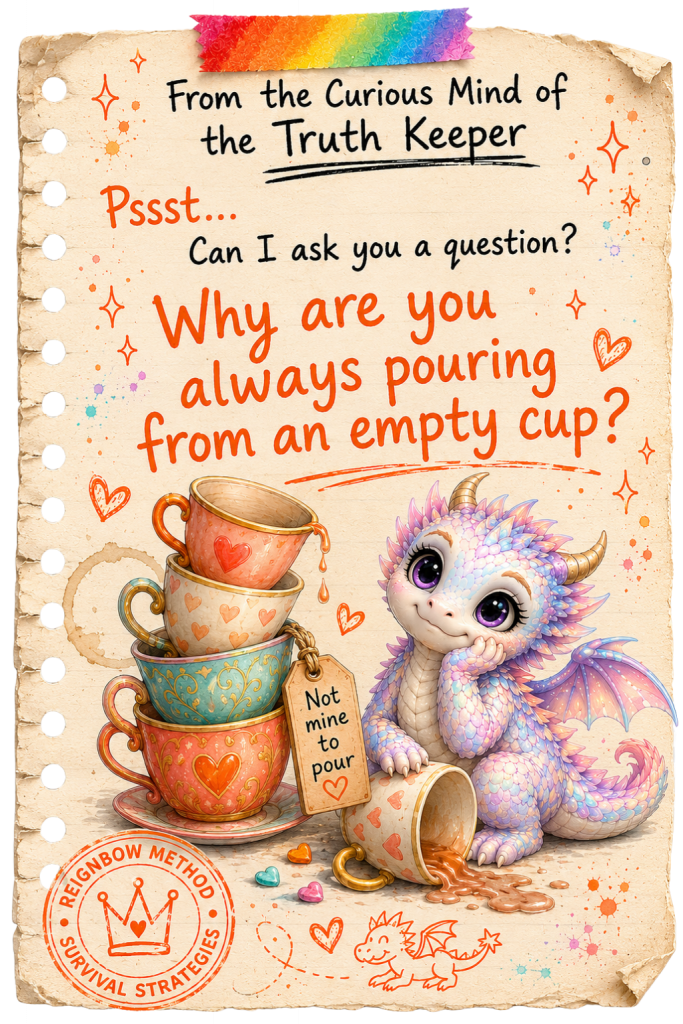
Take a Moment to Reflect…
- What am I afraid might happen if I say no?
- What feels uncomfortable about disappointing someone?
- When did I learn that conflict wasn’t safe?
- Where am I ignoring my own needs to make someone else comfortable?
- What part of myself am I hiding to maintain connection?
- What would help me feel safe being honest?
Compassion often reveals what criticism never could.
What Is This Dragon Protecting?
Beneath the Pleaser is often a deep longing to feel loved, accepted, connected, and safe.
They want harmony.
They want belonging.
They want relationships that feel secure.
The problem is that they often try to create that safety by becoming who they think other people need them to be.
But compliance cannot create authenticity.
Approval cannot create self-worth.
The Pleaser spends so much energy adapting to everyone else that they sometimes forget to ask themselves what they truly want.
Reclaiming the Treasure
Jewel Reclaimed 💎: Authenticity
Every dragon protects something.
The Pleaser protects your connection.
The treasure was never keeping everyone else happy.
The treasure is learning that you can be loved without abandoning yourself.
You do not have to agree with everyone to belong.
You do not have to earn connection through self-sacrifice.
You do not have to make yourself smaller to be accepted.
You are allowed to have needs.
You are allowed to have boundaries.
You are allowed to tell the truth about who you are.
The Pleaser helped you survive.
Now they can learn a new job.
Instead of helping you become who everyone else needs, they can begin helping you become more fully yourself.
Because the treasure they have been guarding all along is your ability to remain true to yourself while staying connected to others.
The dragon is not the problem.
The dragon is the protection.
And beneath the protection is the treasure.
Get Curious Like the Truth Keeper…
There are no right or wrong answers here. Just notice what comes up.
Reflection Questions
What is this dragon helping you to see
What am I afraid might happen if I disappoint someone?
Where am I saying yes when I really want to say no?
What needs of my own have I been ignoring?
When did I learn that keeping the
peace was my responsibility?
What part of myself do I hide to avoid conflict?
✨ Who would I be if I stopped trying to be who
everyone else needed me to be?
When you’re ready… keep reading. The Wisdom Keeper has something they would like you to remember.
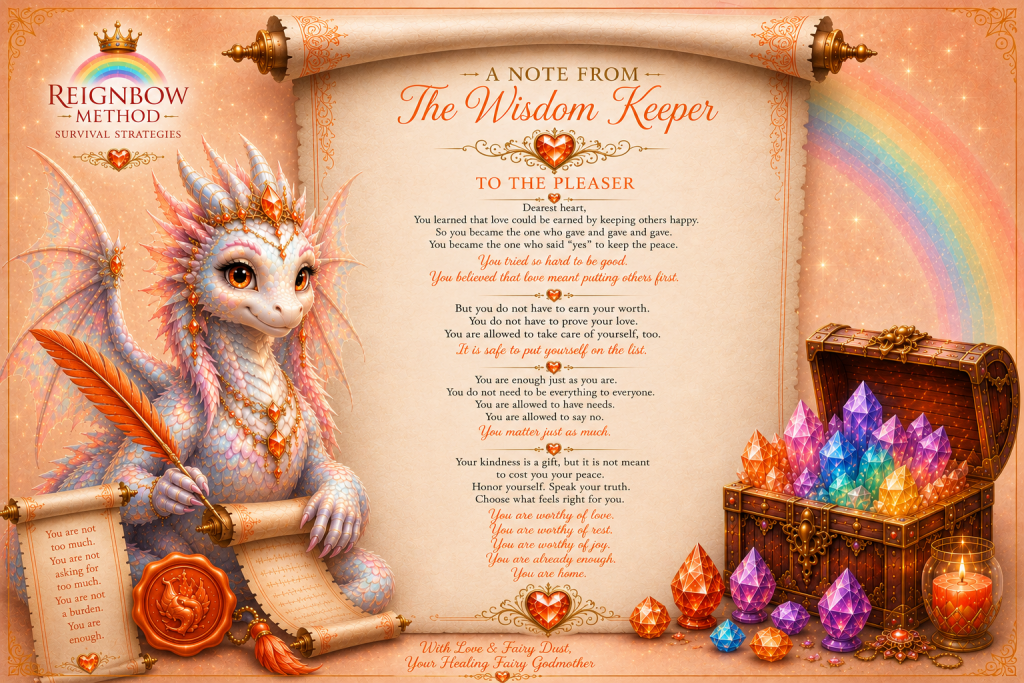
A Note From the Wisdom Keeper
You learned how to make yourself easy to love.
The Pleaser stepped forward when connection felt important and conflict felt dangerous. They learned how to read the room, anticipate needs, and become whatever was required to keep the peace.
So they became thoughtful.
Adaptable.
Considerate.
They learned how to make people comfortable.
They learned how to smooth things over.
They learned how to keep relationships intact.
And those gifts are real.
But somewhere along the way, kindness became self-abandonment.
Compassion became compliance.
And connection came at the cost of authenticity.
You were never meant to shape-shift your way through life.
You were never meant to earn love by ignoring your own needs.
You were never meant to become so focused on everyone else’s feelings that you forgot your own.
The truth is, healthy relationships can survive honesty.
Healthy relationships can survive boundaries.
Healthy relationships can survive disappointment.
Not everyone will agree with you.
Not everyone will understand you.
Not everyone will be happy with your choices.
And that is okay.
You do not have to make yourself smaller to belong.
You do not have to become who someone else wants you to be.
You simply have permission to tell the truth about who you are.
The connection you’ve been trying so hard to protect was never meant to require the loss of yourself.
With love,
The Wisdom Keeper 🐉💜
You Are the
Treasure.
The dragons helped you survive.
Now it’s time to reclaim what has always been yours.
Reclaim Your REIGNBOW
MEET THE OTHER DRAGONS
CONNECT THE DOTS
If this dragon feels familiar, it rarely travels alone.
The Pleaser is part of a larger survival pattern—one where belonging, harmony, and acceptance become more important than honoring your own needs.
You might also recognize these patterns nearby:
The Approval Seeker
“Tell me I’m enough.”
Looks for validation through reflection, reactions, feedback, and approval of others.
Connection: Where the Pleaser seeks harmony by keeping others happy, the Approval Seeker looks for reassurance through validation, feedback, and the reactions of others.

The Dependent
“Don’t let me do this alone.”
Looks for safety through connection, support, and the presence of others.
Connection: Where the Pleaser maintains connection through self-sacrifice, the Dependent looks for safety through support, closeness, and the presence of others.

The Performer
“Love me for what I do.”
Looks for worth through achievement, accomplishment, recognition, and being needed.
Connection: Where the Pleaser earns belonging by meeting the needs of others, the Performer earns belonging through achievement, accomplishment, and being seen as successful.
The Pattern Behind It All
These dragons rarely travel alone.
What looks like one survival strategy is often connected to several others, each trying to solve the same problem in a different way.
One dragon may seek approval from others. Another may cling tightly to connection. Another may strive to achieve and perform. Another may shape-shift to keep everyone comfortable.
Beneath each strategy is the same desire:
To feel safe. To belong. To be loved.
If one dragon feels familiar, there’s a good chance others are flying nearby.
If one dragon feels familiar, there’s a good chance others are flying nearby.
